Pulmonary Thromboembolism Treatment in Sarjapur Road, Bangalore
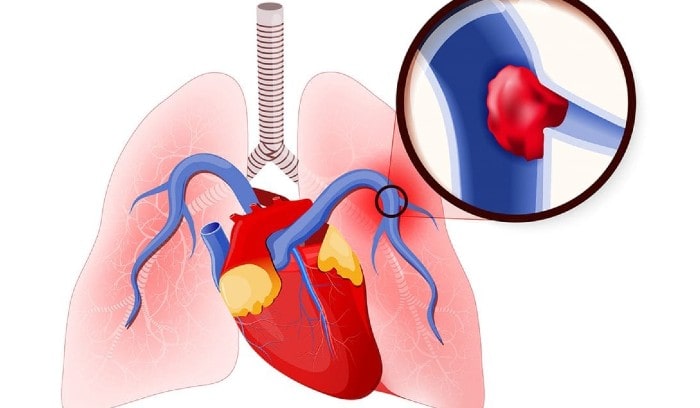
What is pulmonary thromboembolism(PTE)?
Obstruction to the flow of blood in the arteries of the lung with blood clot(most common), tumor cells, fat or air in called PTE. Usually the clot moves up from the deep veins of the lower limbs. This spectrum of PTE and Deep vein thrombosis(DVT) together is called venous thromboembolism(VTE)
Annually about 100 per 1 lakh individuals have PTE
Causes
Causes can be A)genetic B) acquired
- Genetic: factor V Leiden mutation, prothrombin gene mutation, protein C deficiency, proteinS deficiency, hyperhomocysteinemia, among others
- Acquired : immobilization for prolonged periods (bed rest greater than three days, anyone traveling greater than 4 hours, whether by air, car, bus, or train), recent orthopedic surgery, malignancy, indwelling venouscatheter, obesity, pregnancy, cigarette smoking, oral contraceptive pill use
What symptoms will the patient have?

The most common symptoms are dyspnea, pleuritic chest pain, cough, hemoptysis, presyncope, or syncope(loss of consciousness). The onset of symptoms can be brought on suddenly or they can develop gradually depending on the speed and location of the obstruction of the arteries of the lung
Severity of PTE
Hemodynamically stable PTE- Here there is no significant drop in BP, saturation or other echocardiography parameters. Patient can experience mild to no symptoms at all.
Hemodynamically unstable PTE- Here patients are extremely sick with low BP and saturations and echocardiography shows strain on the right side of the heart which pumps blood to the lungs.
Diagonsis and severity assessment can be done with ECG, ECHO, d-dimer, troponin, BNP and Arterial blood gas analysis, chest X-ray and CTPA
CTPA- CT pulmonary angiogram is a definitive test to visualise the clot and assess the clot load in the pulmonary arteries.
Patient can undergo MR angiogram or lung scintigraphy in case CTPA cannot be done (as it involves injection of a iodine dye which some people can be allergic to)
Hemodynamically stable PTE patients are treated with anticoagulants. Efforts need to be made to obviate the risk factors. If the risk factor happens to be genetic then the patient will have to be on life long anticoagulants
Hemodynamically unstable PTE need urgent thrombolysis to dissolve the clot. If the patient is not a suitable candidate for thrombolysis then the clot have to be surgically removed (embolectomy) or by catheter directed thrombectomy.
Thorough attention and care should be taken to manage and treat this condition as partial treatment can lead to impairment of lung function, heart failure, Pulmonary hypertension and recurrence of PTE.